From design idea to manufacture.
Early engineering support. Value engineering. A route from concept to manufacture.
Helping a global office furniture company develop a concept for a major bank’s trading division.

Turn a design intention into a physical product.
A global office furniture company needed to develop a concept into a manufactured mock-up for presentation to a major bank’s trading division. The brief called for engineering input at an early stage: helping translate the idea into an assembly that could be made and presented to the end client.
Working alongside the designer.
Ludwick supported the furniture company from an engineering point of view, bringing practical manufacturing knowledge into the design conversation.
With 30 years of experience in the furniture industry and extensive sheet metal knowledge, we helped bridge the gap between the initial idea and the details needed to manufacture the mock-up
Value engineering, from the design stage.
You do not need a completed set of engineering drawings to involve Ludwick. A sketch, visual concept or early brief can be the starting point for a productive engineering conversation.
We can help value engineer your product by reviewing material choices and thicknesses, simplifying components, and considering how parts are formed, joined, assembled and finished. The aim is to reduce unnecessary cost and manufacturing complexity while preserving the design intent, quality and function
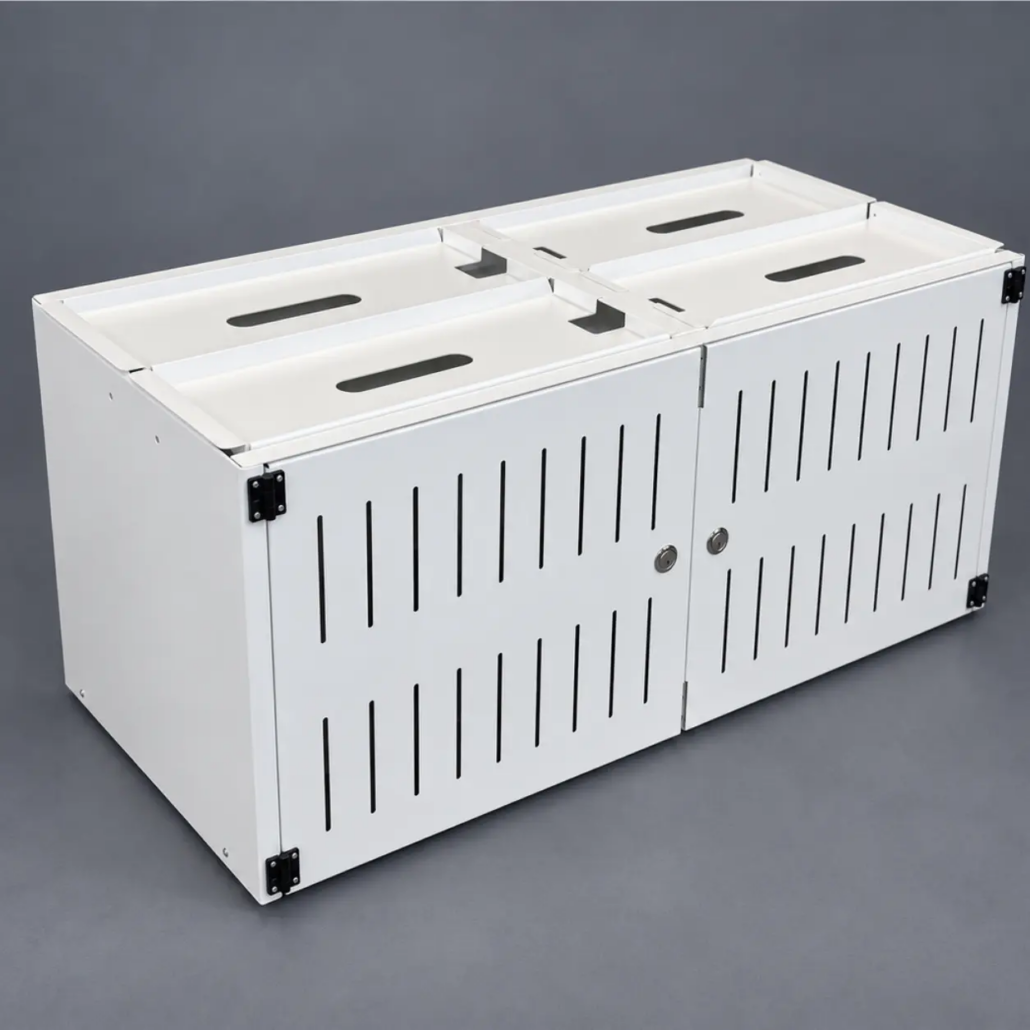
FROM CONCEPT TO MOCK-UP
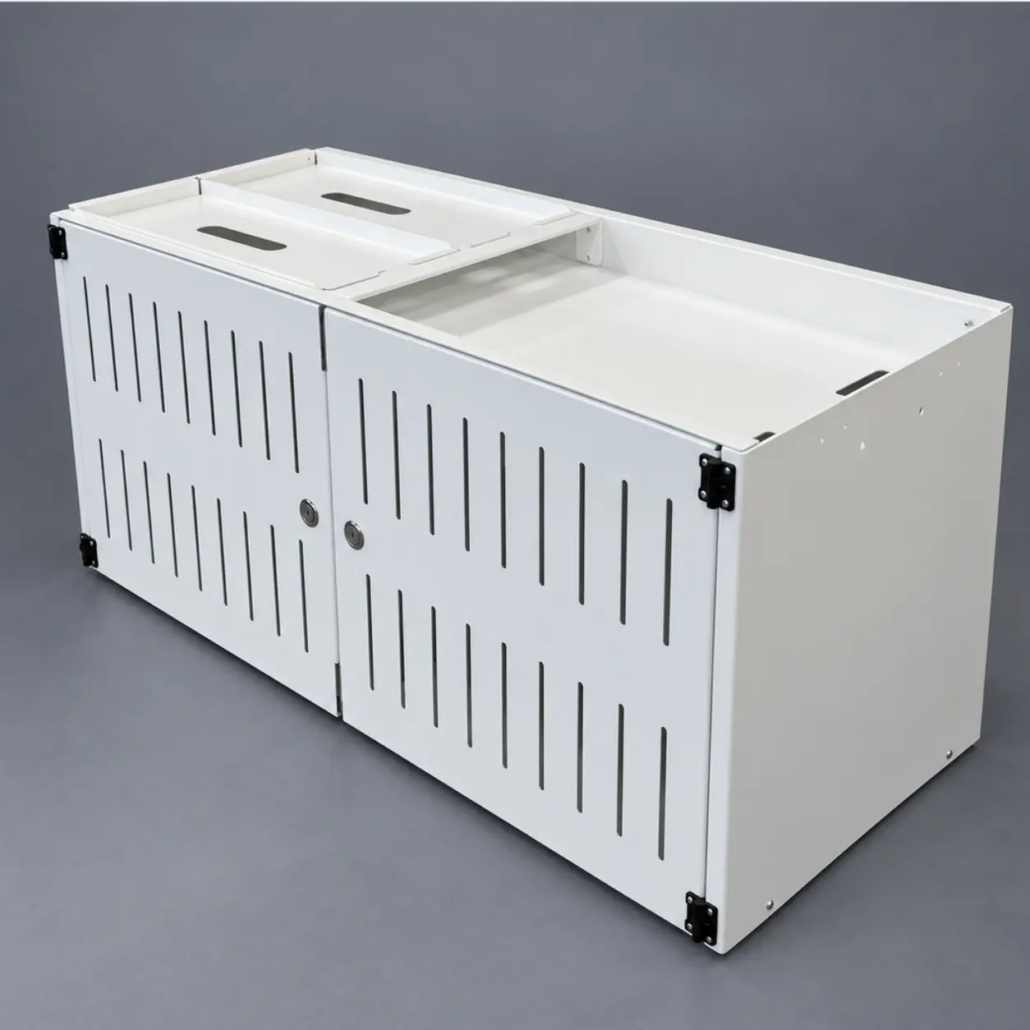
Assembly with two trays removed.
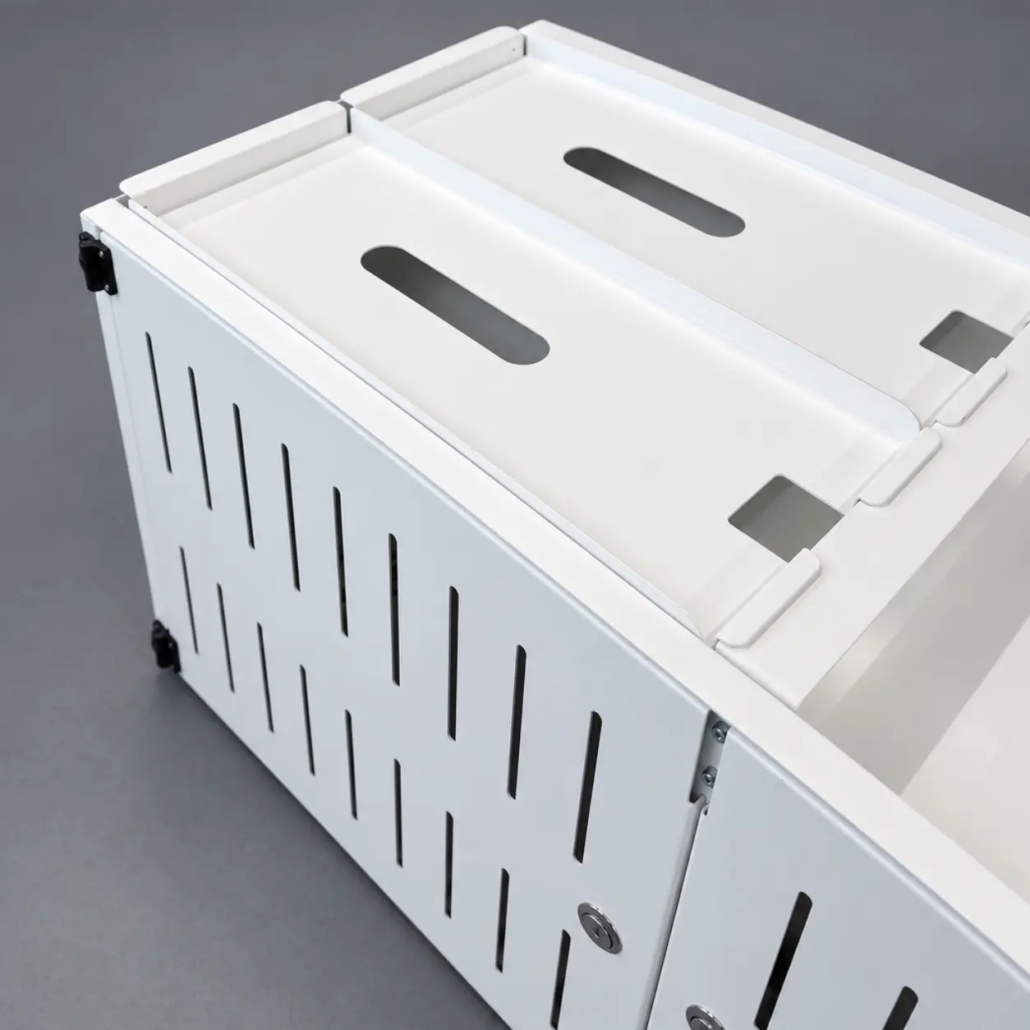
Tray handholds, folded returns and access hardware.
A manufactured mock-up. A practical next step.
The furniture company had a physical mock-up for presentation to the bank’s trading division, bringing the proposal off the page and providing a basis for discussion and refinement.
The project demonstrates how Ludwick can contribute before a design reaches the factory floor. For clients developing a new product or reviewing an existing design, our value engineering support can identify opportunities to use materials more efficiently, reduce part counts and simplify assembly before committing to production.

CALL US: +44 (0)1462 635 455
Email: sales@ludwickprecision.co.uk
Ludwick Precision Ltd.
Unit 26 Cam Centre
Wilbury Way
Hitchin Hertfordshire
SG4 0TW
CALL US: +44 (0)1462 635 455
Email: sales@ludwickprecision.co.uk
Ludwick Precision Ltd.
Unit 26 Cam Centre
Wilbury Way
Hitchin Hertfordshire
SG4 0TW