Blog

Laser cutting vs. CNC bending: what’s the difference and when do you need both

When a sheet metal component needs to be manufactured, laser cutting and CNC bending often work together rather than being alternatives to one another.
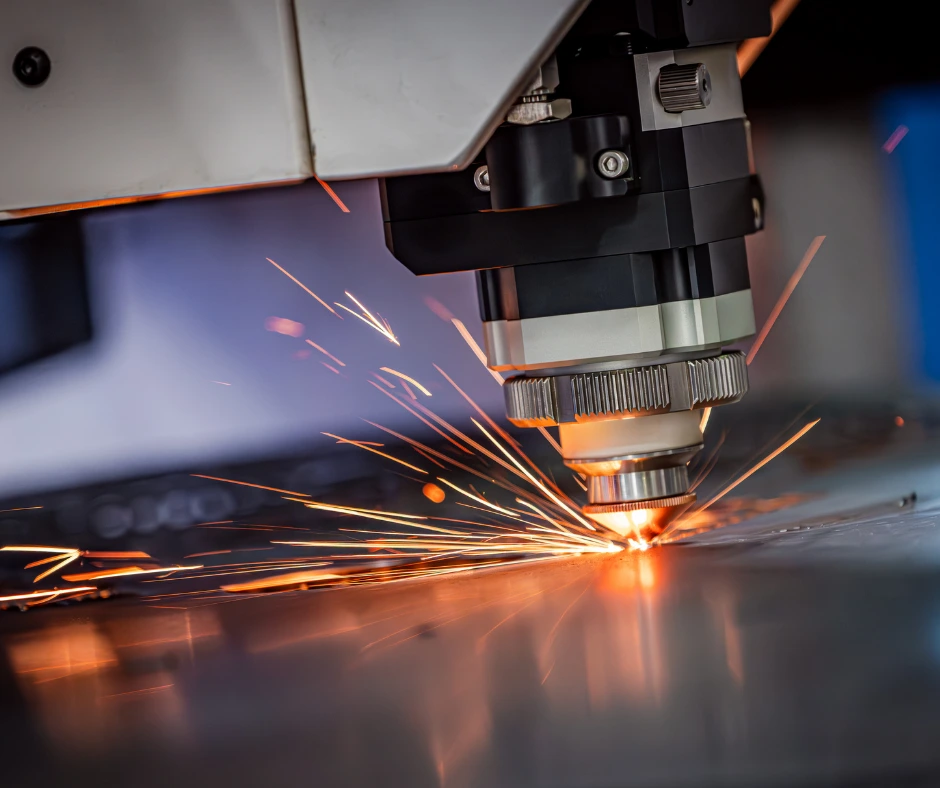
Laser cutting creates the precise flat shape of the component from sheet metal. CNC bending then takes that flat profile and forms it into the required angles and threedimensional shape.

For many fabricated metal parts, you need both.

Laser cutting and sheet metal forming are carried out as part of a wider end-to-end fabrication service, allowing components to move from design and cutting through to forming, welding, finishing and assembly where required.

What is laser cutting?

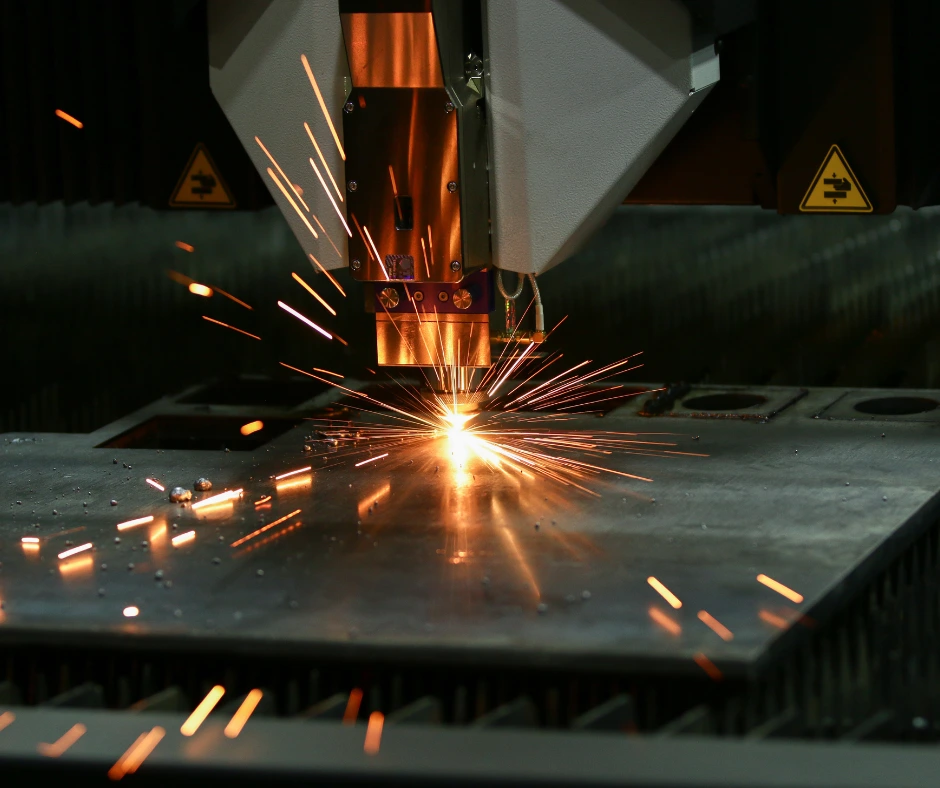
Laser cutting is a manufacturing process used to cut precise shapes, holes and profiles from flat sheet metal. A computer-controlled laser follows a programmed cutting path, allowing complex shapes  to be produced accurately and repeatedly. This makes CNC laser cutting particularly  useful when components need tight tolerances, detailed profiles or consistent results across multiple parts.

At Ludwick Precision, CNC laser cutting is used for precision sheet metal cutting and plate profiling. Our facilities can process mild steel up to 15mm thick, as well as clean-cut stainless steel and aluminium up to 8mm thick.

Laser cutting is commonly used to produce:

  • Flat panels
  • Brackets
  • Plates
  • Covers
  • Enclosure components
  • Furniture components
  • Machine parts
  • Components containing holes, slots or detailed cut-outs

However, when the finished component needs to have sides, angles, folds or a three-dimensional form, cutting is only the first stage.

What is CNC bending?

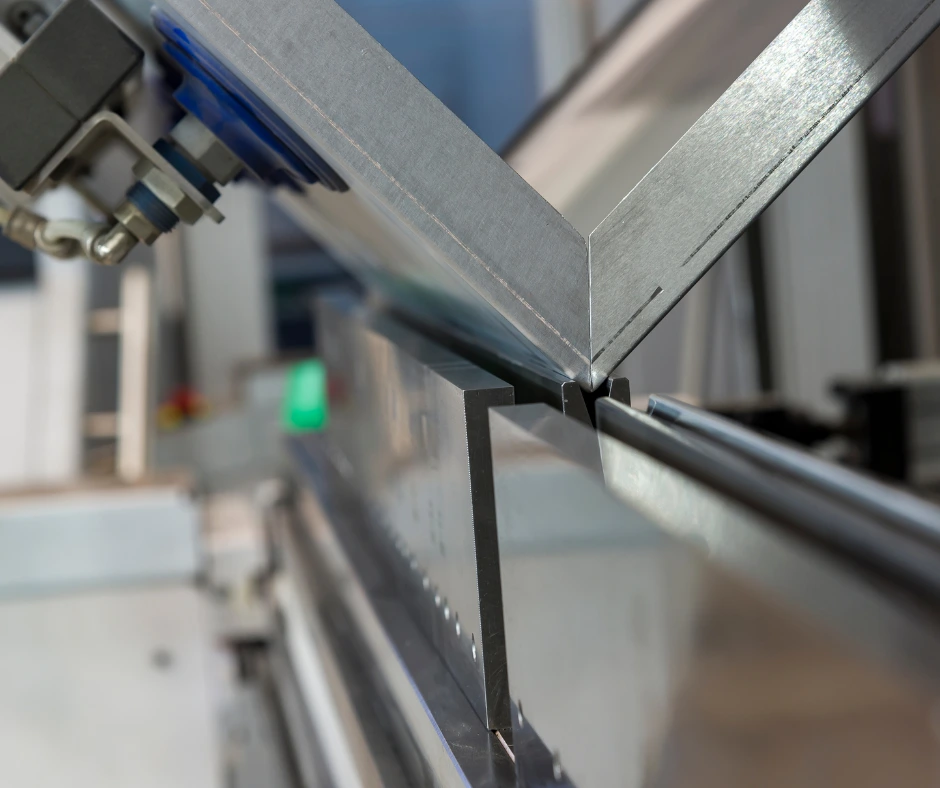
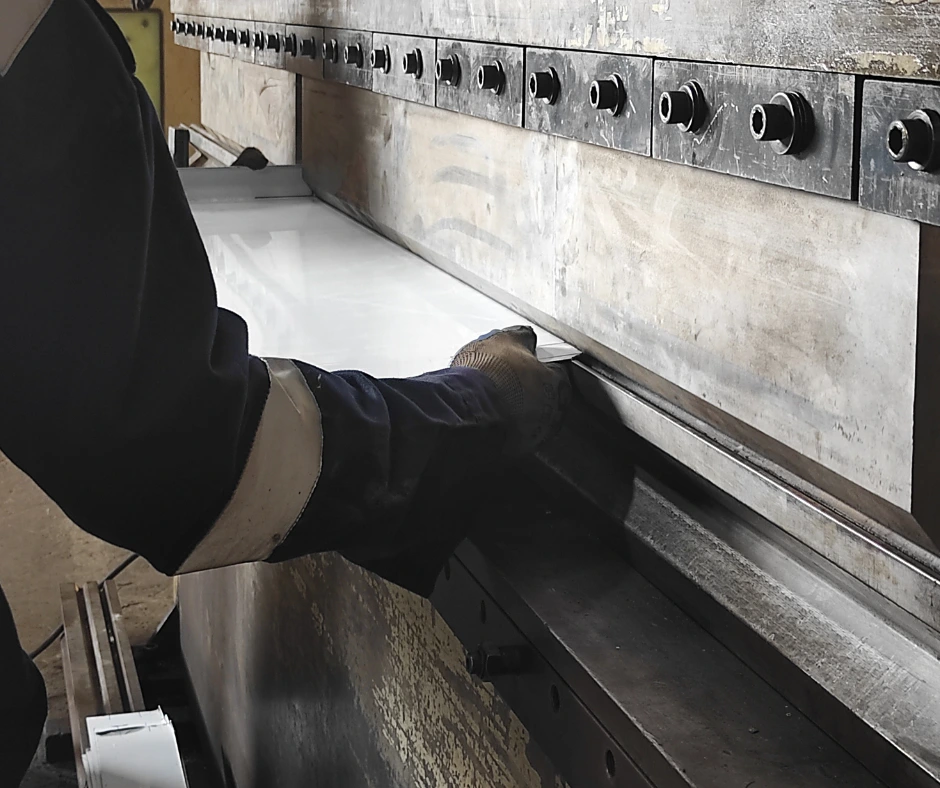
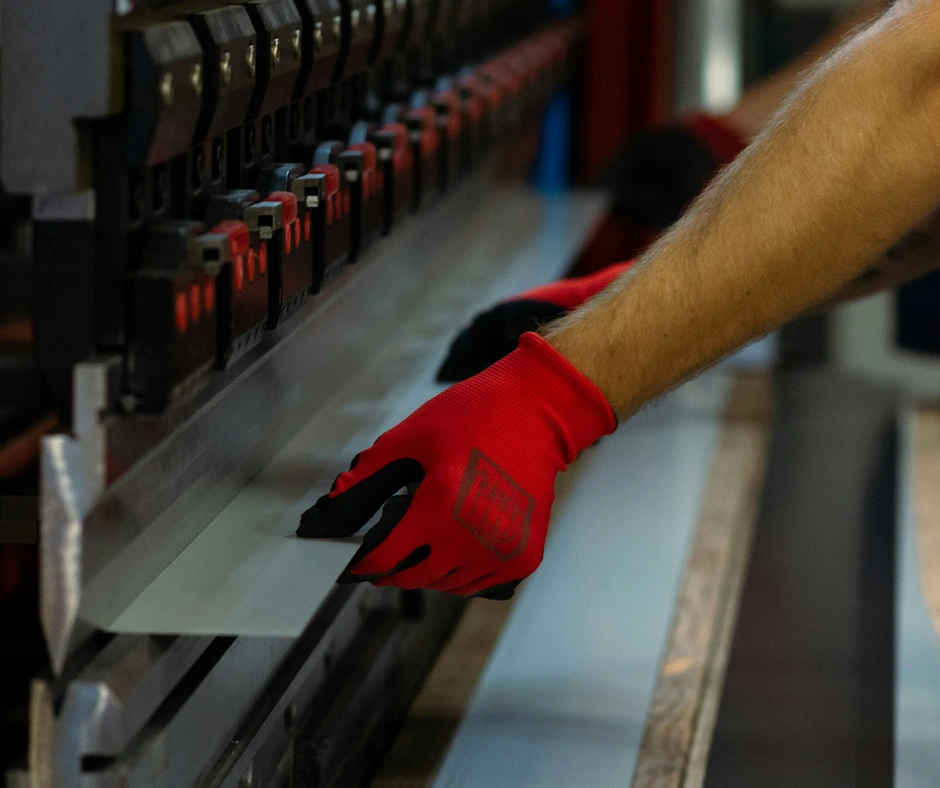
CNC bending, often carried out using a CNC press brake, takes a flat sheet metal component and bends it to predetermined angles and dimensions.

The process is computer-controlled, helping manufacturers achieve consistent bend positions and angles across individual components and production runs.

At Ludwick Precision, our sheet metal forming process uses advanced software and machinery to programme and simulate bending operations before manufacturing. This allows factors such as bend sequence, tooling, and potential collisions to be assessed before the component reaches the machine.

CNC bending can be used to create:

  • 90-degree folds
  • Flanges
  • Channels
  • Boxes and enclosures
  • Trays
  • Brackets
  • Frames
  • Angled panels
  • Complex multi-bend components

What is the difference between laser cutting and CNC bending?

The simplest difference is:
Laser cutting determines the shape of the flat metal component. CNC bending
determines its final three-dimensional form.

A useful way to think about the process is:
Sheet metal → Laser cut profile → CNC bending → Finished component

Laser cutting removes material. CNC bending reshapes it. For example, if you were manufacturing a metal enclosure, the laser could cut the outside profile, ventilation holes, fixing points, and openings into a flat sheet. The component could then move to the press brake, where each side is folded into position to create the finished enclosure.

Neither process replaces the other. They perform different stages of the manufacturing process.

When do you need both laser cutting and CNC bending?

You are likely to need both processes whenever a metal component contains a custom profile as well as one or more bends. This applies to a huge range of fabricated products.

Metal enclosures and housings
Electrical, electronic and industrial equipment often requires sheet metal housings with openings for connectors, displays, ventilation or fixing points. Laser cutting produces these details accurately before the component is bent into its final shape.

Brackets and mounting components
A bracket may appear simple, but it can require a precise outer profile, fixing holes and several accurately positioned bends. Laser cutting and CNC bending allow all of these features to be created from a single piece of sheet metal.

Commercial furniture and interiors
Tables, storage systems, screens, frames and bespoke architectural components
frequently combine detailed metal profiles with folded edges and structural bends.

Ludwick Precision works extensively with sheet metal for commercial interiors, office furniture and architectural applications, where these processes often form part of a wider manufacturing solution.

Industrial components
Machine guards, equipment panels, trays, covers and components for manufacturing equipment often require both processes to achieve the necessary combination of fit, strength and functionality.
Why use one manufacturer for laser cutting and bending?

While it is possible to have components of laser cut by one supplier and bent by another. This keeps the process together which can simplify manufacturing considerably.

The bend requirements of a part should ideally be considered before it is cut.
Material type, thickness, bend radius, hole positions, tolerances and the sequence of bends can all influence how the original flat pattern should be designed. When the same fabrication team is responsible for both processes, they can consider the component rather than treating cutting and bending as separate operations.

That can help with:

  • Design for manufacture
  • Consistency between batches
  • Reducing unnecessary handling
  • Identifying potential manufacturing issues earlier
  • Simplifying communication
  • Managing lead times
  • Maintaining quality throughout production

This forms part of our approach to custom metal fabrication, with design, prototyping and manufacturing considered as connected stages rather than isolated services.

Does every laser-cut part need CNC bending?

No.

If the final component is designed to remain completely flat, laser cutting may be all that is required. Likewise, some simple components can be formed from standard blanks without requiring complex laser cutting.

However, bespoke sheet metal parts frequently use both because the combination gives designers much greater freedom over the final component.

Should the bending process be considered during the design stage?

Yes.

One of the most important parts of sheet metal fabrication is designing the component around the way it will actually be manufactured. A design that looks straightforward in a 3D model may require changes once factors such as tooling access, bend sequence, material thickness and manufacturing tolerances are considered.

At Ludwick Precision, 3D simulation is used within the sheet metal forming process to check bending operations before manufacturing, helping to support a right-first-time approach. This is also why involving your fabrication partner earlier in the design process can be valuable, particularly for bespoke or complex components.

Laser cutting and CNC bending at Ludwick Precision

At Ludwick Precision, we provide much more than an individual cutting or bending service. Our Hitchin-based team provides a complete sheet metal fabrication service, including:

  • Product consultancy and prototyping
  • CNC laser cutting
  • Sheet metal forming
  • Welding and linishing
  • Painting and finishing
  • Assembly and delivery

By managing multiple manufacturing stages together, we can help take a component from an initial concept through to a finished product while maintaining accuracy, consistency and quality throughout the process.

Need a laser cut and formed component?
Whether you already have production-ready drawings or need help turning a concept into something that can be manufactured efficiently, our team can help.

Talk to Ludwick Precision about your next sheet metal fabrication project and request a quotation.

Get in Touch
Contact us directly to see how we can help you.
Thanks for contacting us! We will be in touch to discuss your enquiry.
We respect your privacy. Your information is safe and will never be shared.
Don't miss out. Subscribe today.
×
×